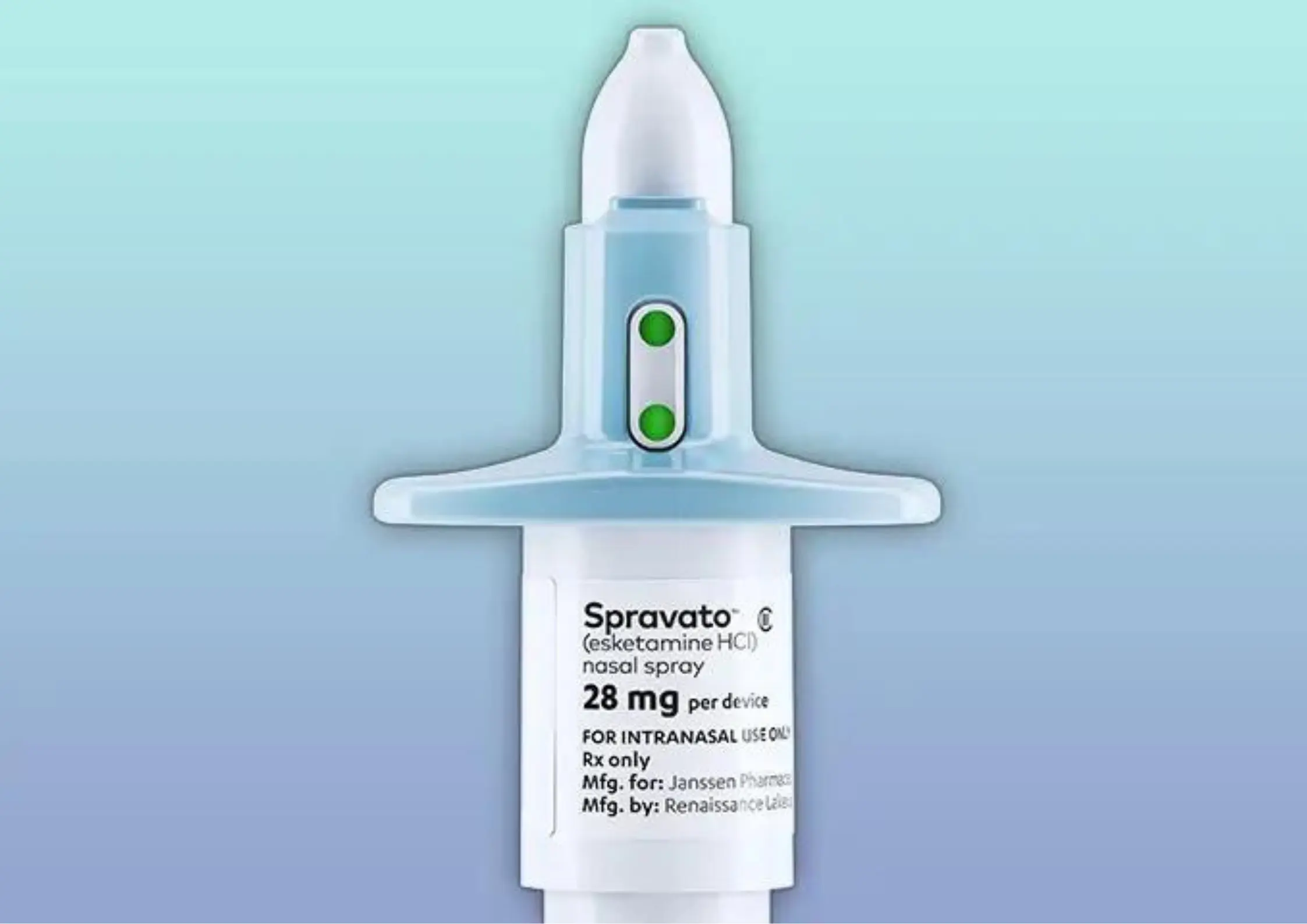
Ketamine and Spravato® (esketamine) get mentioned together often, and for good reason: esketamine is one specific component of ketamine. But they're not interchangeable, and understanding the difference matters if you're weighing either as a path through treatment-resistant depression.
Key Takeaways
- Ketamine is an anesthetic first developed decades ago; at much lower doses, it's been studied off-label for depression, anxiety, and PTSD.
- Spravato® (esketamine) is a specific, FDA-approved nasal spray formulation, approved specifically for treatment-resistant depression and depression with suicidal thoughts.
- Both work through the brain's glutamate system rather than serotonin, which is part of why they can create change within hours to days rather than weeks.
- Both are administered under direct clinical supervision, with a required monitoring period afterward.
What Ketamine Is
Ketamine was developed decades ago as a surgical anesthetic and is still used that way today, particularly in emergency and surgical settings because of how quickly it takes effect. At much lower doses than those used for anesthesia, it's also been studied, generally off-label, for treatment-resistant depression, anxiety, PTSD, and certain chronic pain conditions. It's classified as a Schedule III controlled substance under federal law, reflecting both its medical value and its potential for misuse outside a clinical setting.
What Spravato® Actually Is
Spravato® is esketamine, a specific component of ketamine, formulated as a nasal spray. Unlike broader off-label ketamine use, esketamine went through the FDA's full approval process and, since 2019, has been specifically approved for treatment-resistant depression and for depressive symptoms in adults with major depressive disorder who haven't responded adequately to at least two other antidepressant trials. It's used alongside an oral antidepressant, not as a standalone treatment, and it's only available through a restricted distribution program that requires in-office administration and a monitoring period afterward.
It's worth being clear about what Spravato® is not: it isn't approved as a pain-relieving anesthetic, and it isn't a substitute for hospitalization when a provider determines that's needed, even if you notice improvement after a first dose.
How They Actually Help
Both ketamine and esketamine work by affecting the NMDA receptor and the brain's glutamate system, a different mechanism than the serotonin-focused pathway traditional antidepressants use. This distinct pathway is part of why they can create rapid change, sometimes within hours to days, for people who haven't responded to standard treatment, and why the effects can extend well beyond the immediate dose for many patients.
What to Weigh Before Considering Either
- Administration and monitoring differ. Whichever pathway you're considering, it should happen in a controlled clinical setting with direct supervision, not self-administered at home.
- Side effects are possible, including nausea, dizziness, or headache, and should be discussed with your provider so they can be managed as part of your visit.
- Your health history matters. Certain conditions, including some liver, cardiovascular, or substance use concerns, may affect whether this class of treatment is appropriate for you.
The Bottom Line
If you're exploring these options, the more useful question isn't just "ketamine or Spravato®," it's whether you meet the clinical criteria for treatment-resistant depression, and which structured, supervised program fits your diagnosis and comfort level. At Best Fit, that's delivered through our Spravato® Plus program, which pairs FDA-approved esketamine treatment with counseling and coaching, rather than as a standalone medication visit.
Frequently Asked Questions
Sources: U.S. Food and Drug Administration approval information for esketamine; National Institute of Mental Health research summaries on ketamine and treatment-resistant depression; American Psychiatric Association clinical education materials on ketamine and esketamine.